Wildlife deep dive
Wildebeest — The Engine of the Serengeti
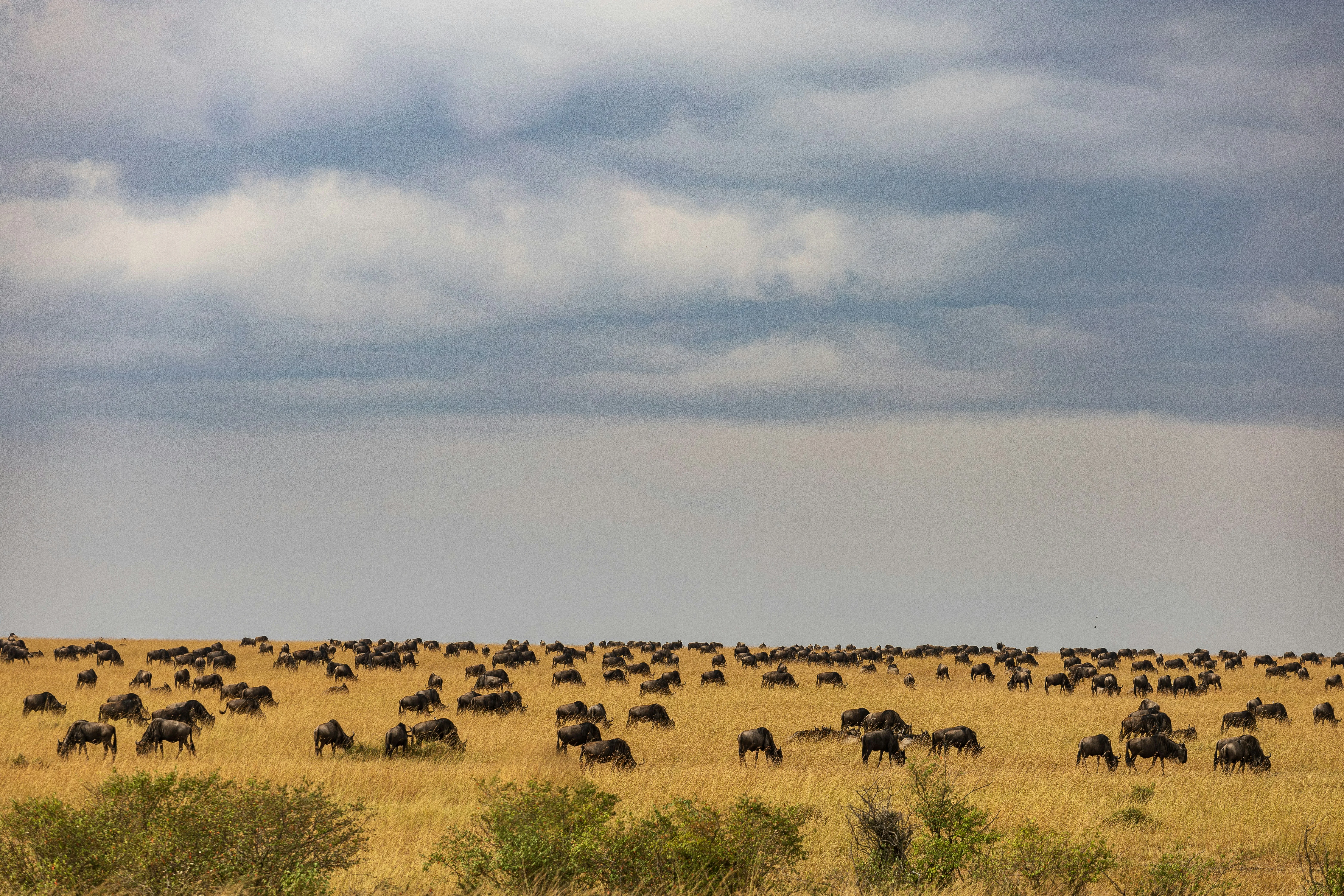
1.5 million of them, moving as one. Without wildebeest, the ecosystem would collapse.
Why Wildebeest Migrate
Wildebeest do not migrate for adventure. They migrate because they are grass specialists with an extraordinary metabolic need for protein. The Serengeti's rainfall gradient means grass grows in waves across the ecosystem. The wildebeest follow the growth — and the predators follow the wildebeest.
Their migration is the largest terrestrial mammal movement on Earth. It shapes the entire ecosystem. Lions time their breeding to the calving season. Vultures rely on river crossing casualties. Even the soil chemistry changes as millions of hooves churn the earth and deposit nutrients.
Calving: The Synchronized Miracle
Every year, roughly 500,000 calves are born in a 3-week window (late January to March). The synchrony is a predator-swamping strategy — produce so many vulnerable calves at once that predators cannot eat them all.
A wildebeest calf can stand within 6 minutes of birth and run with the herd within 24 hours. But for the first few days, they are easy prey for lions, hyenas, and cheetahs. Only about 50% survive their first year.
Predator Dynamics
Wildebeest are the foundation of the Serengeti's food web. Without them, the predator populations would collapse. Lions, hyenas, cheetahs, leopards, crocodiles, and wild dogs all depend on wildebeest for sustenance.
The relationship is not entirely one-sided. Wildebeest have evolved strategies to survive: herd vigilance, synchronized calving, and a constant state of movement that keeps predators guessing.
The Bottom Line
Wildebeest are not beautiful. They are not charismatic. But they are the single most important animal in East Africa. The migration is their story — and it is the greatest wildlife spectacle on Earth.
Read our Great Migration guide or plan your migration safari.
Plan Your Tanzania Safari
Ready for your adventure? Book your safari with Trail Safari Explorers. Explore Serengeti National Park, browse our journal, or check travel resources.