Wildlife phenomenon
The Great Migration — Nature's Greatest Spectacle
1.5 million wildebeest, 400,000 zebras, and 200,000 gazelles on the move. Here is where they are, month by month.
What Is the Great Migration?
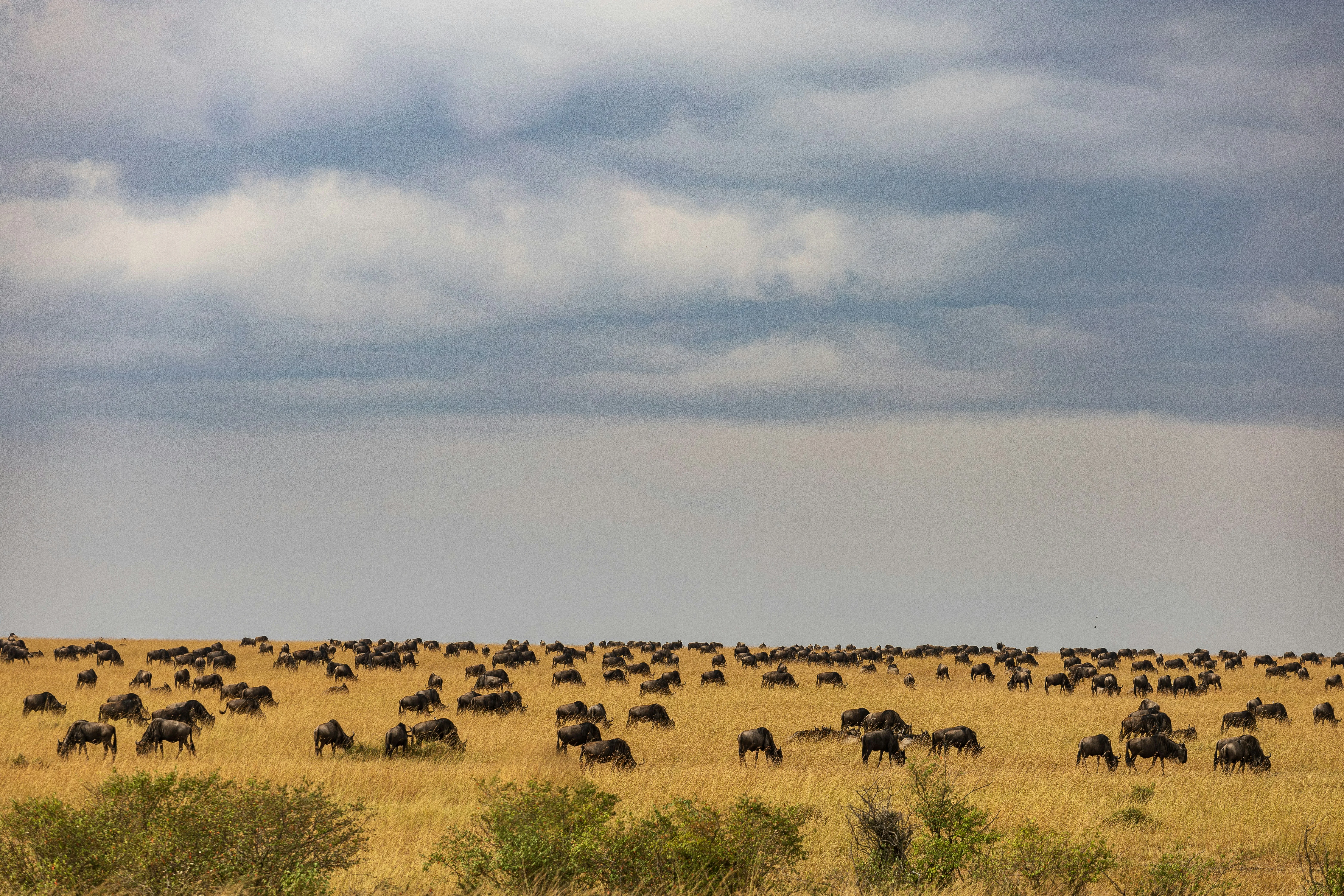
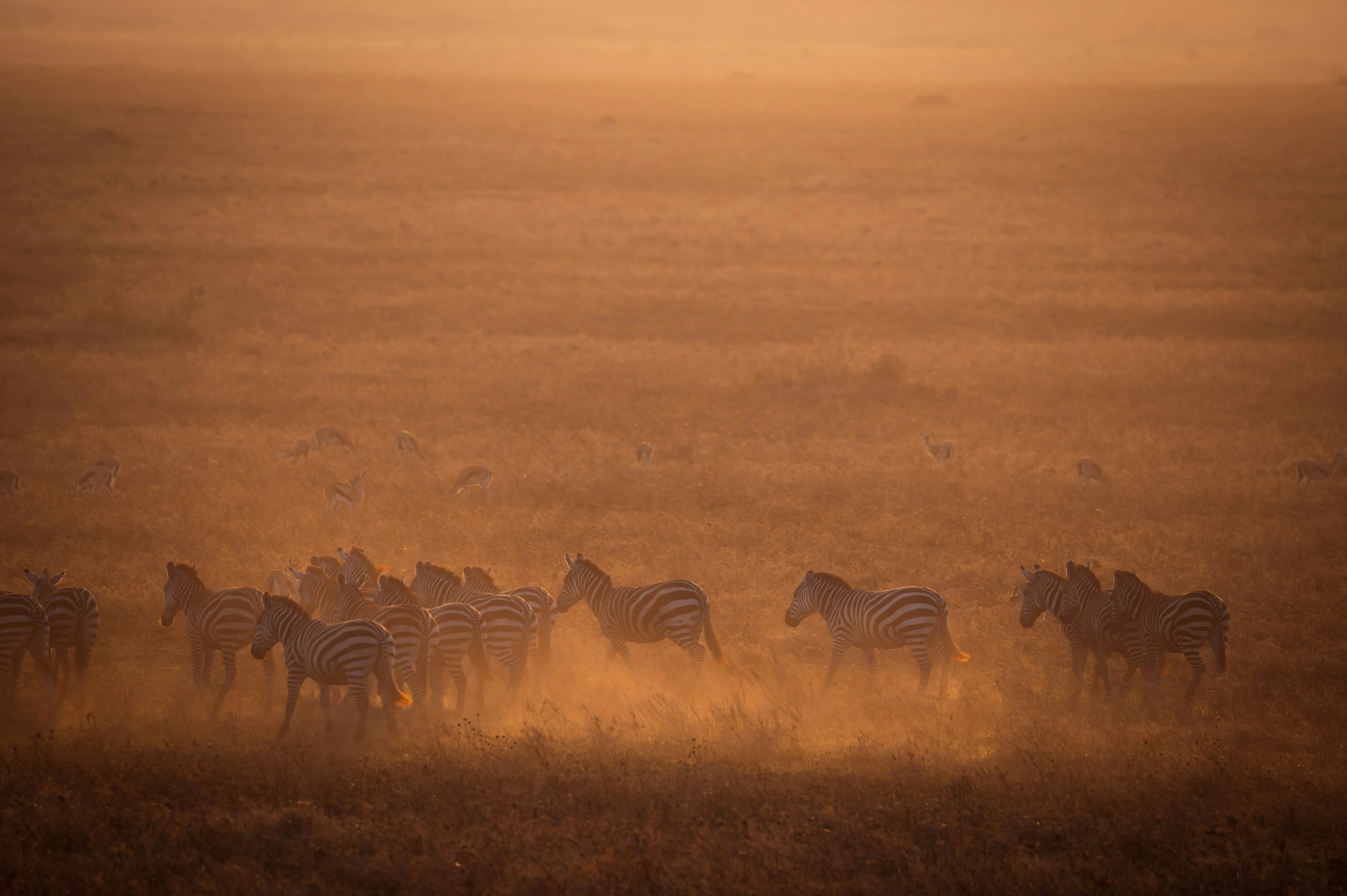
The Great Migration is the largest terrestrial mammal migration on Earth. Over 1.5 million blue wildebeest, accompanied by roughly 400,000 zebras and 200,000 Thomson's gazelles, move in a continuous clockwise loop through the Serengeti-Mara ecosystem, following rainfall and the growth of fresh grass.
It is not a single event but a year-round cycle. The animals are always moving. The drama peaks during the river crossings (July-October), when wildebeest plunge through crocodile-infested waters, and the calving season (January-March), when 8,000 calves are born daily.
Month-by-Month Migration Calendar
January — March: Calving Season
The herds mass in the southern and eastern Serengeti (Ndutu, Ngorongoro Conservation Area). 8,000 calves born daily. Predators are everywhere. Best for big cat action.
April — May: The Long Rains
Herds move northwest through the central Serengeti. Lush green landscapes, dramatic skies, fewer tourists. Some lodges close; others offer huge discounts.
June: The Build-Up
Herds gather in the western corridor, moving toward the Grumeti River. First river crossings (Grumeti) begin. Excellent predator viewing.
July — August: Mara River Crossings
The herds reach the northern Serengeti and begin crossing the Mara River into Kenya. The most dramatic wildlife spectacle on Earth. Crocodiles, chaos, and survival.
September — October: Northern Grazing
Herds spread across the northern Serengeti and Masai Mara. Scattered but still visible. Excellent predator-prey dynamics. Dry season means reliable game viewing.
November — December: The Return
Short rains trigger the move south. Herds travel through the central and eastern Serengeti back toward the calving grounds. Green season begins. Bird migration peaks.
The Mara River Crossing
The Mara River crossing is the migration's most iconic moment. Wildebeest gather on bluffs, hesitation building, until one animal leaps and thousands follow. They plunge 15-foot banks into crocodile-infested water. Many drown, trampled by the herd behind. The survivors scramble up the opposite bank, exhausted and panicked.
Best viewing: Northern Serengeti (Kogatende area), July-October. Crossings are unpredictable — herds may wait for days, then cross in minutes. A good guide with radio contact is essential.
Calving Season: The Other Peak
Between January and March, roughly 500,000 wildebeest calves are born in a 3-week window. The synchrony is a survival strategy — overwhelm predators with sheer numbers. Lions, hyenas, and cheetahs feast, but thousands of calves survive.
Where: Ndutu Plains and southeastern Serengeti. The area is open, short-grass plains — perfect for spotting predators stalking newborns. This is also the best time for cheetah sightings.
Planning Your Migration Safari
Best time to visit:
- River crossings: July-October (northern Serengeti)
- Calving & predators: January-March (southern Serengeti)
- Value & scenery: April-May or November (green season, lower prices)
Where to stay:
- Calving season: Ndutu Safari Lodge, Lake Masek Tented Camp, Nomad Lamai
- River crossings: Sayari Camp, Serengeti Safari Camp, Lemala Mara
- Year-round: Serengeti Serena, Four Seasons, Singita Sasakwa
Plan Your Tanzania Safari
Ready for your adventure? Book your safari with Trail Safari Explorers. Learn about the Great Wildebeest Migration, read our Mara River Crossing guide, or compare Masai Mara vs Serengeti.
Browse our 7-Day Serengeti Great Migration Safari,9-Day Tanzania Safari Great Migration, or the 15-Day Mara River Safari & Zanzibar.
Explore Serengeti National Park, browse our journal, or check travel resources.