Pillar Guide · The Great Migration
The Great MigrationThe Great Wildebeest Migration GuideThe Great Wildebeest Migration: Your Complete Safari Guide to Tanzania & Kenya
Nature's most spectacular wildlife phenomenon—1.8 million wildebeest across Serengeti-Mara.Experience nature's most spectacular wildlife phenomenon. The Great Migration is widely considered the most magnificent wildlife spectacle on the planet—a continuous journey through the Serengeti-Mara ecosystem.Experience nature's most spectacular wildlife phenomenon with Trail Safari Explorers. The Great Migration is widely considered the most magnificent wildlife spectacle on the planet—a continuous, circular journey covering approximately 1,800 miles through the Serengeti-Mara ecosystem. Serengeti – the heart of the Migration.
Sample routes
Tailor a Migration Circuit
8-Day Classic Tanzania Migration
8 Days / 7 Nights
From $4,800 pp (mid-range, double occupancy)
- Days 1–2: Arusha arrival, Tarangire game drive
- Days 3–4: Fly to seasonal Serengeti strip (south or north based on travel month)
- Days 5–6: Full-day drives focusing on herd concentrations and predators
- Day 7: Ngorongoro crater descent
- Day 8: Return to Arusha → onward travel
10-Day Ultimate Mara River Crossing
10 Days / 9 Nights
From $6,500 pp (luxury camp mix)
- Day 1: Arrive Kilimanjaro → Arusha
- Days 2–3: Central Serengeti (Seronera) predator immersion
- Days 4–7: Northern Serengeti stakeouts at multiple crossing points
- Day 8: Western Corridor or photographic balloon safari
- Day 9: Fly to Arusha → extension or beach add-on
- Day 10: Depart
12-Day Tanzania & Kenya Migration Circuit
12 Days / 11 Nights
From $9,200 pp (luxury tier, double occupancy)
- Days 1–3: Southern/central Serengeti (seasonal focus)
- Days 4–6: Northern Serengeti Mara River crossings
- Days 7–9: Masai Mara & private conservancies (night drives, walks)
- Day 10: Cultural immersion + bush dinner
- Day 11: Nairobi city or Amboseli add-on
- Day 12: International departure
Guide overview
Table of Contents
Follow this outline to jump to timing guides, regional highlights, itineraries, or booking tips as you shape your migration safari.
Distance covered
~1,800 miles yearly across Serengeti & Masai Mara
Herd size
1.5M wildebeest · 250k zebra · 300k gazelle + predators
Best windows
Calving (Jan–Mar), Grumeti (May–Jun), Mara (Jul–Oct)
Safari styles
Mobile camps, fly-ins, private charters, small-group departures
Trail Safari role
Live tracking, seasonal camp holds, bespoke photographic guiding
Why travel now
Own the Migration Moment
Year-Round Spectacle
There’s no off-season—calving in Ndutu, rutting in the Western Corridor, Mara River crossings, and the southern return each deliver their own drama.
Strategic Mobility
We pair seasonal mobile camps (Lemala Ewanjan, Laba Migration, Siringit) with permanent lodges to keep you beside the herds without backtracking.
Intimate Access
Private 4x4s, max-seven departures, and photographic guides let you invest time at crossings, lion hunts, and calving nurseries without rushing.
Conservation & Culture
Travel supports Maasai and Kuria communities, anti-poaching patrols, and research teams who protect this living planetary phenomenon.
Key regions
Follow the Herds
Southern Serengeti & Ndutu
Calving plains (Dec–Mar)
- Short-grass volcanic plains ideal for birthing
- 500,000+ calves born in six weeks; predator bonanza
- Lemala Ewanjan, mobile camps, photographic vehicles
Central Serengeti (Seronera)
Transitional heartland (Apr–May & Nov)
- Resident predators, riverine fig trees, kopje lions
- Best for leopards, balloon safaris, year-round wildlife
- Connects southern and northern herds with minimal transfers
Western Corridor & Grumeti
May–July river crossings
- Grumeti River crocodile gauntlet, wildebeest rut
- Rolling hills, whistling thorn forests, riverbank sundowners
- Labalaba Grumeti Art Lodge, private balloon charters
Northern Serengeti (Kogatende & Lamai)
Mara River crossings (Jul–Oct)
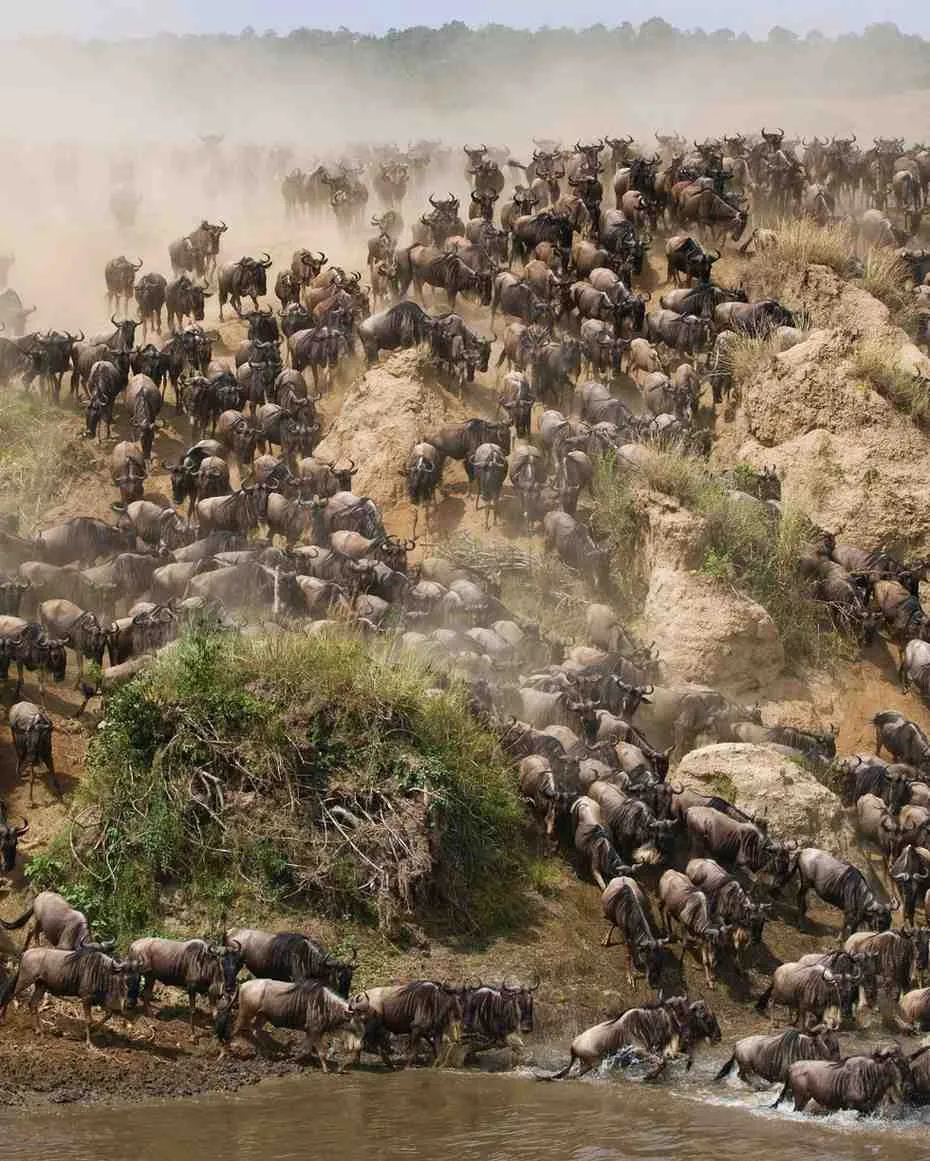
- Multiple crossing points, steep banks, crocodile ambushes
- Smaller crowds than Kenya’s main reserve
- Laba Migration Camp, Siringit seasonal setups, private rangers
Ngorongoro Conservation Area
Gateway & Big Five finale
- Crater floor game drives, Empakaai & Olmoti hikes
- Ndutu woodlands for cheetah hunts and tree-climbing lions
- Pairs with Lake Manyara or cultural highland visits
Masai Mara & Conservancies
Kenya’s dry-season stage (Jul–Nov)
- Mara Triangle, Olare Motorogi, Mara Naboisho, Mara North
- Night drives, walking safaris, low vehicle densities in conservancies
- Lodges: Angama Mara, Sanctuary Olonana, &Beyond Bateleur, Mahali Mzuri
Timing Guide
The Great Migration Month by Month
January
Southern Serengeti / Ndutu
Calving begins, 8,000 calves daily, predator saturation.
Best for: Calving, predator action, photography
February
Southern Serengeti / Ndutu
Peak calving, predator densities extraordinary.
Best for: Calving, photographic safaris
March
Southern to Central Serengeti
Calving slows, herds move northwest, green landscapes.
Best for: Green-season photography, value
April
Central Serengeti
Long rains, tall grass, fewer visitors, storm light.
Best for: Photography, total solitude, value
May
Central to Western Corridor
Herds move northwest, first river crossings (Grumeti).
Best for: Western Corridor drives, Grumeti crossings
June
Western Corridor / Northern Serengeti
Grumeti crossings continue, dry season begins.
Best for: Grumeti crossings, early northern positioning
July
Northern Serengeti / Masai Mara
Peak season opens, Mara River crossings begin.
Best for: Mara River crossings, predator drives, balloon safaris
August
Northern Serengeti / Masai Mara
Peak crossing season, multiple crossings daily.
Best for: Mara River crossings, Tanzania-side advantage
September
Northern Serengeti / Masai Mara
Crossings continue but slow, herds begin south return.
Best for: Late-season crossings, eastern Serengeti columns
October
Eastern / Central Serengeti
Short rains trigger south return, dramatic columns.
Best for: Eastern Serengeti sightings, open-plains photography
November
Eastern Serengeti
Short rains peak, lowest visitor numbers, best birding.
Best for: Birding, photography, solitude
December
Southern Serengeti / Ndutu
Cycle completes, pre-calving concentrations.
Best for: Pre-calving herds, family safaris
Wildlife & phenomena
What Unfolds
Migration Blueprint
The Great Wildebeest Migration follows four distinct phases across the calendar year. From January through March, the herds concentrate on the southern Serengeti's Ndutu plains for calving season, where approximately 8,000 calves are born daily during peak weeks. Between April and June, the herds move northwest into the Central Serengeti and onward to the Western Corridor, traveling in long columns visible from kilometers away. July through October marks the northern phase, when the herds reach the Mara River and undertake dramatic crossings between Tanzania's northern Serengeti and Kenya's Masai Mara. Finally, from November through December, the short rains trigger the southward return journey through the eastern Serengeti, completing the annual cycle. The full month-by-month breakdown above covers exact positioning for each phase.
Predators in Tow
The Serengeti hosts over 3,000 lions, with prides coordinating strategic ambushes at river crossing points where panic and confusion create hunting opportunities. The region's famous cheetah coalitions hunt on the short-grass plains, utilizing their status as the fastest land animals to pursue wildebeest calves and Thomson's gazelle. Hyena clans numbering fifty or more animals compete directly with lions at crossing sites, often outcompeting them through sheer numbers and persistence. The Mara River's Nile crocodiles represent perhaps the most fearsome predators of all—individuals reaching five meters in length and over seventy years of age have witnessed an estimated thirty to forty crossing seasons, positioning themselves with extraordinary patience for the annual feast. Our /experiences/morning-game-drives maximize predator sighting opportunities during peak hunting hours.
Supporting Cast
While wildebeest dominate the migration narrative, numerous species travel with or alongside the herds. Topi, eland, and both Grant's and Thomson's gazelle follow the migration cycle, taking advantage of the grazed pathways and predator confusion. Giraffe remain resident in the Serengeti year-round, browsing acacia crowns above the moving chaos. Hippo pools line the Mara and Grumeti rivers, providing constant entertainment even when herds are distant. Rare species occasionally make appearances: black rhino are glimpsed at Moru Kopjes, while African wild dogs have been sighted on the migration's southern and eastern fringes. Lake Natron flamingos and Loliondo marsh cranes are accessible from Serengeti-adjacent camps, adding avian diversity to the mammal spectacle.
Photography Essentials
Successfully photographing the Great Migration demands specific technical preparation. Fast shutter speeds of 1/1000 second or faster freeze the explosive motion of river crossings and predator pursuits. Telephoto reach between 400–600mm proves essential for river crossings where vehicles must maintain twenty-five meter distances, while wide-angle lenses capture the open-plains panoramas that convey the herds' true scale. A beanbag provides superior vehicle-mounted stability compared to monopods on rough tracks. Anti-dust protocols protect equipment during afternoon winds that sweep across the plains. A gimbal head enables smooth video capture of crossing sequences. The golden hours around dawn and dusk deliver exceptional light for predator hunts, while the harsh midday light—usually avoided in landscape photography—works well for river crossings where the drama overrides light quality concerns.
Ethical Viewing
Responsible migration viewing follows strict protocols that protect both wildlife and the visitor experience. The twenty-five meter distance rule is not advisory—it is actively enforced by park rangers and directly affects whether herds commit to a crossing or abort the attempt. Pressure from vehicles positioned too close has caused herds to turn back from the river, sometimes remaining on the wrong side for days. Our guides enforce distance requirements strictly, never position vehicles to intercept herd movements, and follow Tanzanian park authority protocols without exception. This disciplined approach not only respects the animals but actually improves crossing success rates, as relaxed herds make better decisions than harassed ones. Learn more about our conservation commitment through /experiences/volunteer-wildlife-conservation.
Experiences
Craft Your Style
Stakeout Game Drives
Spend hours positioned near Mara or Grumeti crossing points; patience yields explosive action when the first wildebeest commits. Our game drives adapt to herd movements daily. morning game drives.
Mobile Camp Immersion
Seasonal camps relocate with the herds—canvas walls, bucket showers, and front-row seats to rumbling hooves under star-filled skies. Experience authentic safari living. small-group safaris.
Walking & Balloon Safaris
Ngorongoro highlands hikes, Serengeti concession walks, and sunrise balloons provide alternative vantage points on mega-herds. hot-air balloon safaris.
Cultural Encounters
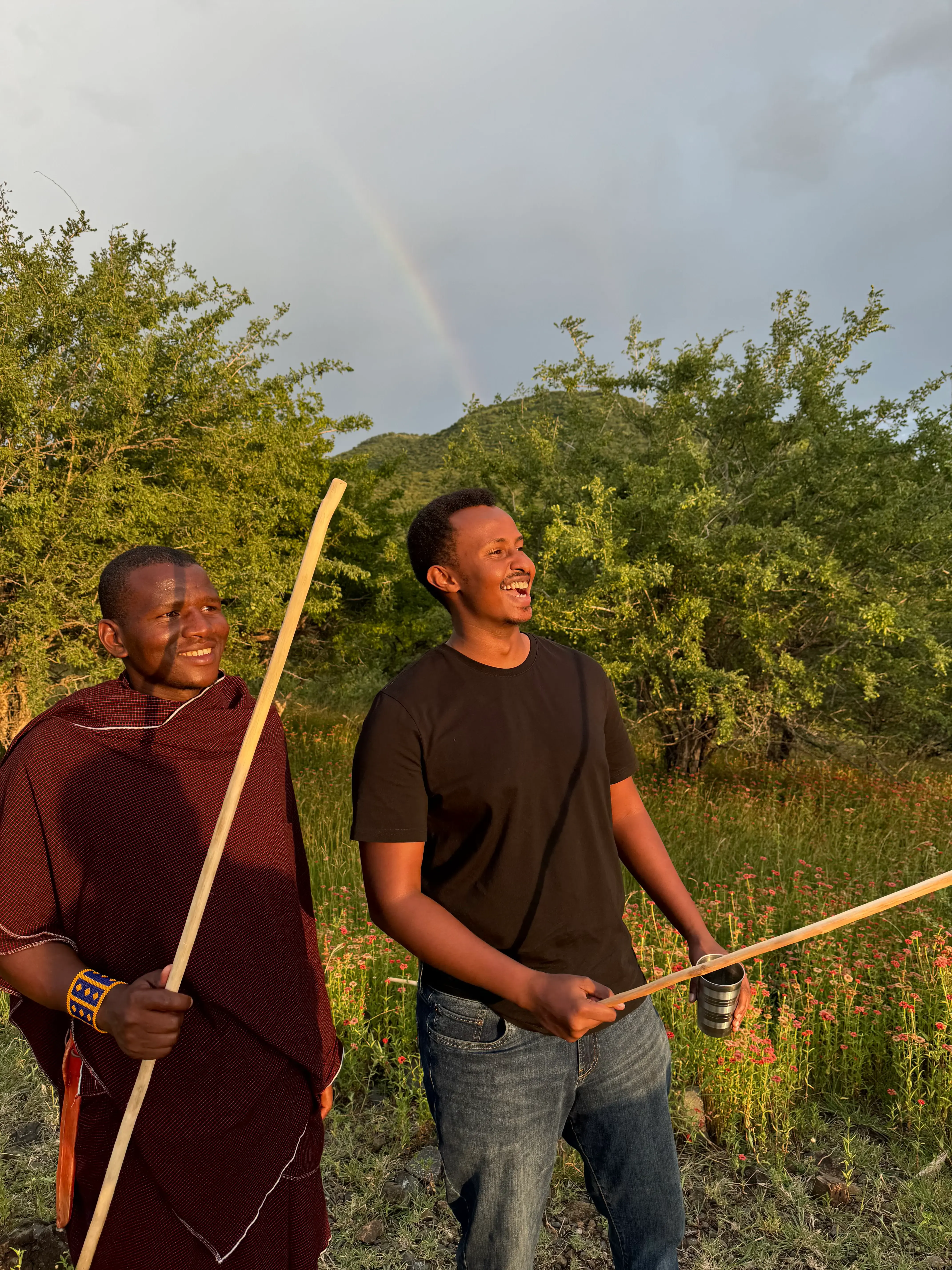
Visit Maasai villages, community conservancies, and Olduvai Gorge to contextualize the migration's relationship with people and history. Understand the human element of this ancient landscape. Maasai village visit.
Photography Workshops
Dedicated departures add pro instructors, private vehicles, power solutions, and editing tents to refine storytelling. Capture the migration's drama with expert guidance. photographic safaris.
Cross-Border Safaris
Pair northern Serengeti with Masai Mara conservancies for dual-country coverage and greater crossing odds. Experience the migration across two nations in one seamless journey. Kenya safaris.
Country Comparison
Tanzania or Kenya — Which Side of the Migration?
The Same Migration, Two Countries
The Great Wildebeest Migration crosses an international border — from Tanzania's Serengeti into Kenya's Masai Mara and back — making it the only wildlife spectacle in the world that visitors can experience in two different countries as part of the same natural event. Both sides host river crossings. Both have extraordinary predator concentrations. But the experience of watching the migration from the Tanzania side versus the Kenya side is genuinely different in character, logistics, and what you see. Explore Serengeti National Park or discover Kenya safari options.
The Tanzania Advantage
On the Tanzania side, the northern Serengeti (Kogatende and Lamai Wedge) offers multiple Mara River crossing points across a wider stretch of river. Vehicle numbers are lower than in the main Kenya reserve. More importantly, a Tanzania itinerary can track the entire migration cycle in a single country: witnessing calving on the Ndutu plains in January, following the columns north through the Western Corridor in May and June, and arriving at the Mara River for crossings in July — without leaving Tanzania. This continuity of the full migration story is only possible on the Tanzania side.
The Kenya Advantage
Kenya's Masai Mara offers infrastructure and activity diversity unavailable in Tanzania's national parks. The private conservancies surrounding the Mara — Mara North, Naboisho, Ol Kinyei, Mara Naboisho — permit night drives, off-road driving, and walking safaris that are not available in Tanzania's national parks. The Mara is more accessible from Nairobi (a 45-minute flight or 5-hour drive), making it an easier add-on for travellers already in Kenya. Vehicle numbers at the main Mara crossing points are higher than Tanzania, but the conservancies offer the same wildlife at a fraction of the crowd.
Our Recommendation
For a first-time migration visitor: Tanzania's Serengeti gives you the full story, from calving to crossing, in a single ecosystem. For a return visitor or someone with 12+ days: our 12-Day Tanzania & Kenya Migration Circuit combines both sides — tracking the herds from southern Serengeti through the Mara River crossings in Tanzania, then crossing into Kenya's private conservancies for night drives and walking safaris before flying out of Nairobi. It is the most complete migration experience available.
Seasonality & packing
Choose Your Window
The migration does not operate on a fixed calendar — it follows the rains, and rainfall patterns shift by weeks from year to year. The seasonal windows below represent typical patterns based on decades of observation. For real-time scouting intelligence, our operations team monitors camp positioning reports daily and adjusts recommendations accordingly. Contact us within three months of travel for current herd positioning.
Plan month-by-month: Migration river crossings in July, Migration river crossings in August, and wildebeest calving season in January.
Calving Season · Jan – Mar
- Ndutu short grass, easy herd access, dramatic predator hunts
- Best for families, photographers, and first-timers seeking action with minimal transfers
- Expect afternoon showers; lush backdrops and warm temps
Western Corridor · Apr – Jun
- Green season value with fewer vehicles
- Grumeti River crossings mid-June; wildebeest rut begins
- Roads can be muddy—fly-ins recommended for comfort
Mara River Season · Jul – Oct
- Peak demand—book 9–12 months ahead
- Multiple crossings daily in northern Serengeti and Masai Mara
- Dry weather, cooler mornings, dustier afternoons—pack layers & buffs
Return South · Nov – Dec
- Short rains trigger southern migration, fewer visitors
- Ideal for budget-conscious travelers, shoulder pricing, and photography of dramatic skies
- Lemala Ewanjan & Siringit reposition for early calving arrivals
Packing essentials
- Neutral moisture-wicking layers + insulating mornings kit
- Rain shell (green season) & dust protection (dry season)
- Telephoto & wide-angle lenses, beanbag, rain/dust covers
- Binoculars, headlamp, spare batteries, multi-outlet power bank
- Soft-sided duffel (15 kg limit) + daypack with dry bags
- Reusable water bottle, snacks, electrolytes for long stakeouts
- Notebook or journaling app to log sightings and guide intel
Seasonal camps & departures
Secure Your Front-Row Seat
Laba Migration Camp (Jul–Oct)
Northern SerengetiIntimate 8-tent seasonal camp
From $750 pp/night (fully inclusive)
- Private access to multiple Mara River crossing points
- Photographic vehicles, flexible drive schedules, gourmet cuisine
- Perfect for serious wildlife enthusiasts and couples
Grumeti Signature Luxury (Jun–Jul)
Western CorridorWed departures · 7 Days / 6 Nights
From $4,650 pp
- Tarangire → Ngorongoro → Grumeti crossing focus
- Art-forward Labalaba lodge, kopje sundowners, private guides
- Guaranteed departures once 4 guests confirm
Calving Season Specialists (Jan–Mar)
Ndutu & KusiniPrivate or small-group fly-ins
From $3,600 pp (6-day express)
- Lemala Ewanjan or Siringit mobile camps
- Cheetah hunts, calving nurseries, photographic tuition
- Optional add-ons: Ngorongoro crater, Lake Eyasi culture, Zanzibar unwind
FAQs
Migration Questions Answered
Is the migration predictable?+
Exact crossing days cannot be predicted with certainty—that depends on rainfall patterns, pasture conditions, and herd instinct in the moment. However, the four seasonal phases and their typical timing have held remarkably consistent for decades. The calving season begins on the Ndutu plains in January through March with near-certainty. The herds reach the Western Corridor between May and June reliably. The northern Serengeti and Masai Mara hold the herds between July and October. The southward return happens November through December. What remains unpredictable is the exact day of a river crossing—which is why we recommend three to four nights minimum at each key zone rather than one-night stops. Our operations team monitors daily scout reports and can reposition guests between camps when herd movements shift unexpectedly.
Which side is better: Tanzania or Kenya?+
Neither side is objectively 'better'—they offer genuinely different experiences worth understanding before booking. Tanzania's northern Serengeti, particularly the Kogatende and Lamai Wedge areas, offers multiple Mara River crossing points across a wider stretch of river, with significantly fewer vehicles than the main Kenyan reserve. More importantly, a Tanzania itinerary can track the entire migration cycle in a single country: witnessing calving on the Ndutu plains in January, following the columns north through the Western Corridor in May and June, and arriving at the Mara River for crossings in July—without ever leaving Tanzania. Kenya's Masai Mara has more infrastructure, and the private conservancies surrounding the main reserve—Mara North, Naboisho, Ol Kinyei—offer night drives and walking safaris unavailable in Tanzania's national parks. The Kenyan side tends to have more vehicles at the river; Tanzania's Lamai Wedge has fewer. For a first migration visit, we typically recommend Tanzania for the complete story. For return visitors wanting to add the conservancy experience, Kenya offers excellent diversity. Our 12-Day Tanzania & Kenya circuit covers both sides.
Do I need to be fit?+
The migration safari itself requires no physical fitness beyond the ability to sit comfortably in a vehicle for four to six hours with occasional short breaks for photography and leg-stretching. Game drives are passive observation experiences—you watch from a vehicle, not on foot. Walking safaris available in Ngorongoro concessions and some private conservancies do require moderate fitness, typically involving three to four hours on foot across flat terrain at altitude. Mobile camps involve short walks between tents and the dining area on uneven ground, but nothing strenuous. Balloon safaris require the ability to climb into a basket and crouch briefly on landing—most adults of any fitness level manage this without difficulty. If you have specific mobility concerns, tell us when you enquire and we will design an itinerary around them, selecting lodges with easier access and shorter walking distances.
How far ahead should I book?+
For July and August—the peak Mara River crossing months—book nine to twelve months in advance. The best-positioned camps, including Laba Migration Camp, Lamai Wedge lodges, and northern Serengeti mobile camps, fill first, often within hours of opening their season booking windows. The most experienced guides with migration expertise are also reserved early. For June, September, and October, six months ahead is usually sufficient for most camp options, though the premium properties still require earlier commitment. For the calving season from January through March, three to six months ahead is typically adequate, as these months attract fewer visitors despite being arguably more dramatic than the river crossings for pure wildlife action. Small-group guaranteed departures have fixed availability windows that can fill quickly—check current availability or contact us directly to hold a provisional booking while you finalize dates.
What about weather & packing?+
The migration calendar spans all four of Tanzania's weather patterns, so packing depends entirely on when you travel. The dry season from June through October brings cool mornings with temperatures of eight to fourteen degrees Celsius at dawn, warming to twenty-eight to thirty-two degrees by midday, no rain, and dusty afternoon drives—pack warm layers for early starts, a light windproof shell, and dust covers for camera equipment. The green season from November through May brings warm temperatures and afternoon showers—a light waterproof shell replaces the windproof, and rubber-soled footwear helps on wet grass. Year-round essentials include neutral-coloured safari layers avoiding blue and white, a wide-brim hat, SPF 50+ sunscreen, polarised sunglasses, binoculars with ten by forty-two magnification minimum, a 400mm or longer telephoto lens if you photograph, and a soft-sided duffel under fifteen kilograms for bush flight weight limits. Full lists and seasonal variations are detailed in our Tanzania Travel Resources guide.
Explore Further
Read our great wildebeest migration guide,monthly calendar, or Mara River crossing guide.
Explore Serengeti,best migration camps, or calving season guide.
Read our best time to visit Serengeti,Serengeti park guide, or browse our journal.