Kilimanjaro guide
Kilimanjaro Training & Preparation — Your 12-Week Plan
A practical fitness and preparation guide to get your body and mind ready for the roof of Africa.
Start With Your Baseline
Kilimanjaro does not require extreme fitness — average hikers summit every day. What it requires is consistent aerobic capacity, leg strength, and mental resilience. If you can walk 8-10 km on flat ground without struggle, you have a foundation. If you can hike uphill for 3-4 hours, you are already close.
The goal of training is not to become an athlete. It is to build the endurance base that lets you focus on acclimatization rather than physical exhaustion.
The 12-Week Training Plan
Here is a progressive plan designed to peak on departure day:
Weeks 1-4: Foundation (Base Building)
- 3-4 cardio sessions per week (30-45 min): brisk walking, jogging, cycling, swimming
- 1 weekend hike (2-3 hours) on trails or hills
- Light core work twice weekly (planks, bridges, leg raises)
- Focus: Consistency, not intensity
Weeks 5-8: Build (Strength & Endurance)
- 4 cardio sessions per week (45-60 min), including 1 interval session
- 1 midweek hike (2-3 hours) with a light pack (3-4 kg)
- 1 long weekend hike (4-6 hours) on steep terrain if possible
- Add squats, lunges, and step-ups (2x weekly)
- Focus: Mimic the demands of multi-day hiking
Weeks 9-11: Peak (Simulation)
- Back-to-back long hikes on Saturday and Sunday (4-5 hours each)
- Hike with your full Kilimanjaro pack (5-8 kg daypack)
- Include stair climbing or steep hill repeats (1x weekly)
- Test all gear — boots, socks, layers — on these hikes
- Focus: Back-to-back hiking is the single best simulation
Week 12: Taper
- Reduce volume by 50-60%
- 2-3 easy cardio sessions (30 min)
- 1 short hike (2 hours) in week 1, then rest
- Focus: Arrive fresh, not fatigued
What to Train
Aerobic Endurance
The most important factor. Long, slow cardio builds the mitochondrial density your muscles need for sustained effort at altitude. Target: 3-5 hours of continuous low-intensity activity.
Leg Strength
Quads, calves, and hip stabilizers do the work. Step-ups (with a pack), lunges, and calf raises are more useful than gym machines.
Core Stability
Uneven terrain and a daypack load your lower back and hips. A strong core prevents fatigue and injury on the trail.
Mental Resilience
Train in rain, wind, and cold. Summit night is 6-8 hours of discomfort. If you have experienced it in training, it is less shocking.
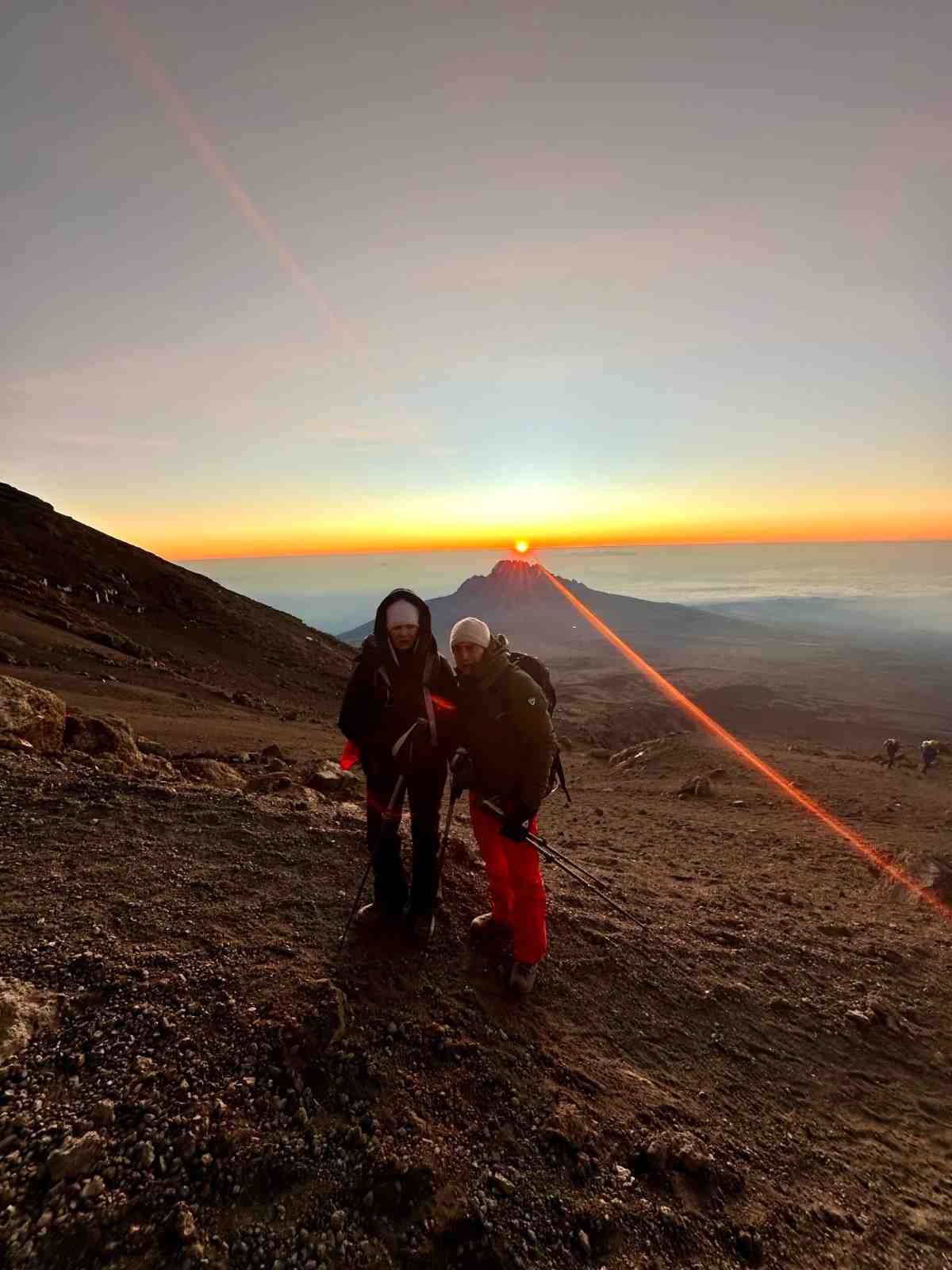
Gear to Test Before You Go
- Hiking boots — Must be broken in. Blisters end climbs. Buy them 2-3 months early.
- Socks — Merino wool, never cotton. Test your sock-boot combination on long hikes.
- Daypack — Train with the pack you will carry. Adjust straps for optimal fit.
- Layers — Test your layering system in cold, wet, and windy conditions.
- Trekking poles — Reduce knee strain by 20-30%. Learn proper technique before Kili.
- Headlamp — Summit night is dark. Practice using it without looking down.
Nutrition & Hydration in Training
On Kilimanjaro, you will need to eat and drink even when you do not feel like it. Altitude suppresses appetite and thirst. Practice eating small, frequent meals during long training hikes. Experiment with energy gels, bars, and electrolyte drinks to find what works for your stomach.
Hydration target in training: 3-4 liters per day. On the mountain, guides will push 4-5 liters. Get used to drinking water constantly — it is the simplest altitude sickness prevention.
The Bottom Line
You do not need to be extraordinary to climb Kilimanjaro. You need to be consistent. Four months of regular hiking, some strength work, and gear testing will put you in better shape than 80% of summit attempts. The rest is acclimatization, patience, and a refusal to quit.
Plan Your Tanzania Safari
Ready for your adventure? Book your safari with Trail Safari Explorers. Explore climb Mount Kilimanjaro, or read our Kilimanjaro difficulty guide.
Read our altitude sickness guide,Kilimanjaro weather guide,safari packing list, or safari clothing guide.
Browse our journal, or check travel resources.