Kilimanjaro guide
Kilimanjaro Altitude Sickness — Prevention, Symptoms & Safety
Altitude is the main reason climbers fail. Here is how to recognize it, prevent it, and stay safe on the mountain.
What Is Altitude Sickness?
Acute Mountain Sickness (AMS) occurs when your body cannot adapt quickly enough to reduced oxygen levels at high altitude. On Kilimanjaro, you ascend from 1,800m at the gate to 5,895m at the summit in just 5-8 days. At 5,000m, there is roughly 50% less oxygen than at sea level.
AMS is not related to fitness. Elite athletes are just as susceptible as casual hikers. What matters is genetics, rate of ascent, and acclimatization strategy.
Symptoms to Watch For
Mild AMS (common, usually manageable):
- Headache (the hallmark symptom)
- Nausea or loss of appetite
- Fatigue and weakness
- Dizziness or lightheadedness
- Poor sleep
- Shortness of breath on exertion
Moderate to Severe AMS (dangerous, requires immediate action):
- HAPE (High Altitude Pulmonary Edema): Fluid in lungs. Cough with frothy sputum, blue lips, extreme breathlessness at rest.
- HACE (High Altitude Cerebral Edema): Fluid in brain. Confusion, inability to walk straight, altered consciousness.
HAPE and HACE are life-threatening. The only treatment is immediate descent. Never ignore severe symptoms.
Prevention: The Golden Rules
- Choose a longer route — 7-8 day routes (Lemosho, Northern Circuit) give your body time to adapt. Each extra day significantly improves summit chances.
- Climb high, sleep low — Routes that ascend during the day and descend to sleep (Machame, Lemosho) aid acclimatization.
- Go pole pole (slowly) — Guides will say this constantly. A slow pace preserves energy and lets your body adjust.
- Hydrate aggressively — Drink 4-5 liters daily. Dehydration worsens AMS.
- Eat even when not hungry — Altitude suppresses appetite. Force yourself to eat carbohydrates.
- Avoid alcohol and sleeping pills — Both suppress breathing and worsen AMS.
- Consider Diamox — Acetazolamide speeds acclimatization. Consult your doctor before travel.
Diamox: What You Need to Know
Diamox (acetazolamide) is a prescription medication that accelerates acclimatization by increasing breathing rate. It is widely used on Kilimanjaro and is considered safe and effective.
Key points:
- Standard dose: 125mg twice daily, starting 1-2 days before ascent
- Common side effects: Tingling fingers/toes, more frequent urination, slight taste changes
- Not a substitute for proper acclimatization — it helps, but slow ascent still matters
- Contraindications: Sulfa allergy, certain kidney conditions — see your doctor
- Some climbers carry it as a "just in case" without taking it preventively
We recommend consulting your doctor 2-3 months before your climb to discuss Diamox and other altitude medications.
When to Turn Back
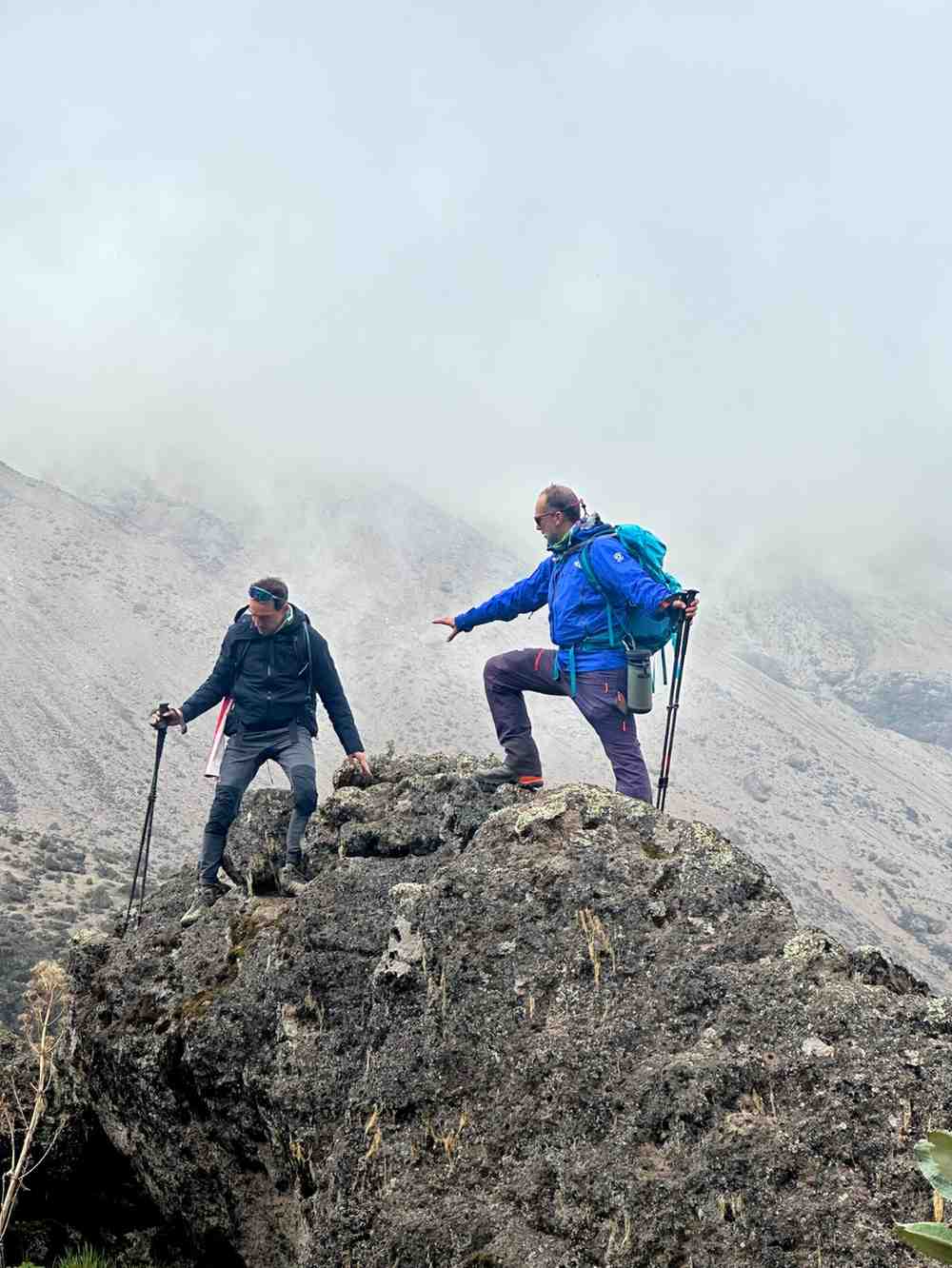
Your guides are trained to recognize dangerous symptoms and will make the call if you cannot. But you should also be honest with yourself. Turning back is not failure — it is survival.
Go down immediately if you experience:
- Severe headache unrelieved by rest or medication
- Vomiting repeatedly
- Shortness of breath while resting
- Coughing up frothy or pink fluid
- Confusion, inability to think clearly, or altered behavior
- Inability to walk a straight line (ataxia)
Descent of even 300-500 meters usually brings dramatic improvement. Oxygen can be administered en route. Never push through severe symptoms to reach the summit.
Monitoring on the Mountain
Reputable operators use daily health checks: pulse oximeters measure blood oxygen saturation, and guides ask standardized questions about symptoms. These checks are not optional — they are safety protocols.
At Trail Safari Explorers, our guides carry portable oxygen and are trained in evacuation procedures. We prioritize your safety over summit statistics — the mountain will always be there. You need to be too.
Plan Your Tanzania Safari
Ready for your adventure? Book your safari with Trail Safari Explorers. Explore climb Mount Kilimanjaro, or read our Kilimanjaro difficulty guide.
Read our training & preparation guide,Kilimanjaro weather guide,safari packing list, or medications guide.
Browse our journal, or check travel resources.